1. Padded Linen Panel Headboard With Button Tufts
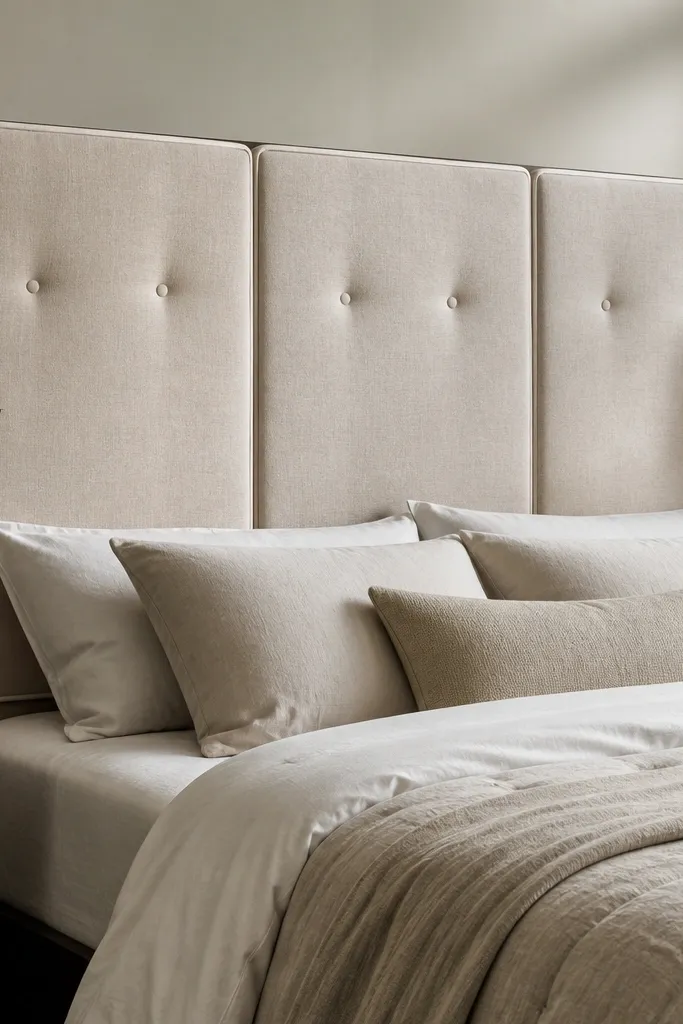
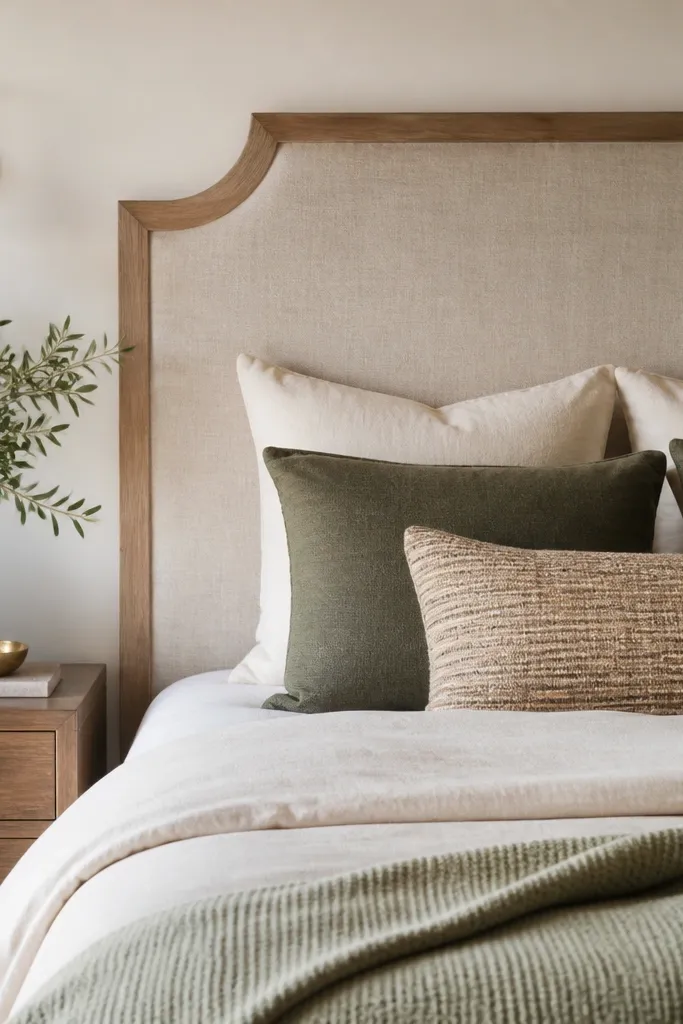
This one looks cozy because the surface is soft but still structured. Linen over 1 inch foam gives you that “sink-in” feel without the sag. Button tufts also create visual depth — the light catches the small dimples instead of flattening the whole wall. I built mine with a wood frame so it leans back cleanly and doesn’t wobble when you push pillows against it.
Cut plywood to your target size and frame it with 1x2s for a finished edge. Stretch linen tight over 1 inch upholstery foam and a thin layer of batting, then tuft using upholstery buttons and long needle-and-thread or a tufting gun. Keep the panel seams straight so the tufts don’t drift; I space buttons about 10-12 inches apart for a neat grid.
Use piping along the outer edge — it makes DIY look intentional even if your fabric tension isn’t perfect.
Skipping a rigid back makes the tufts look like they sag in the middle.
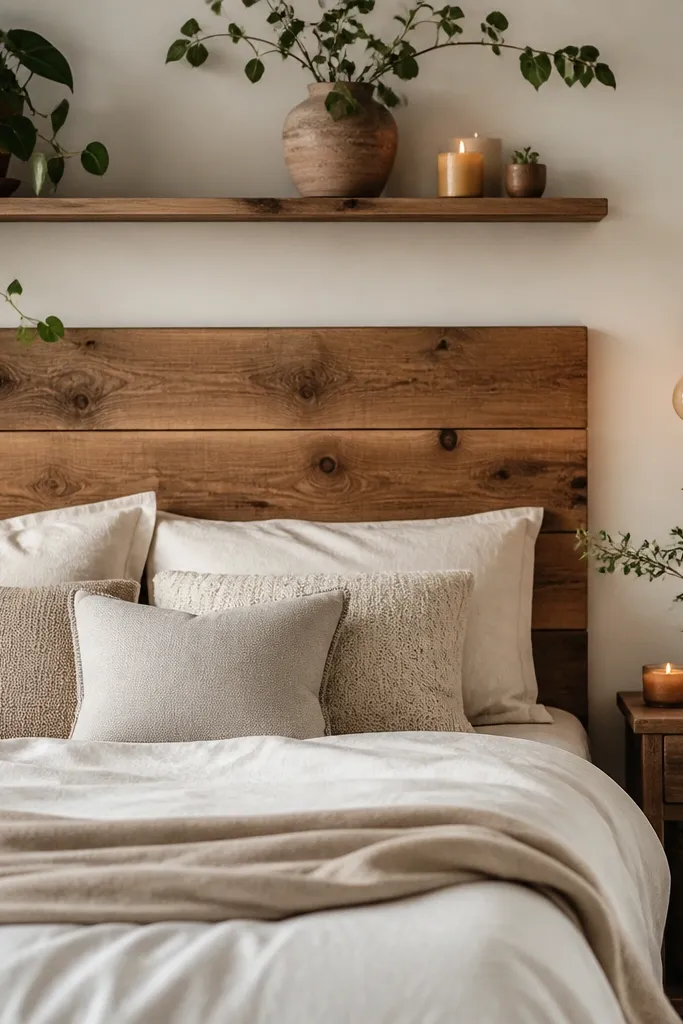
2. Reclaimed Pallet Slat Headboard With Soft Walnut Stain
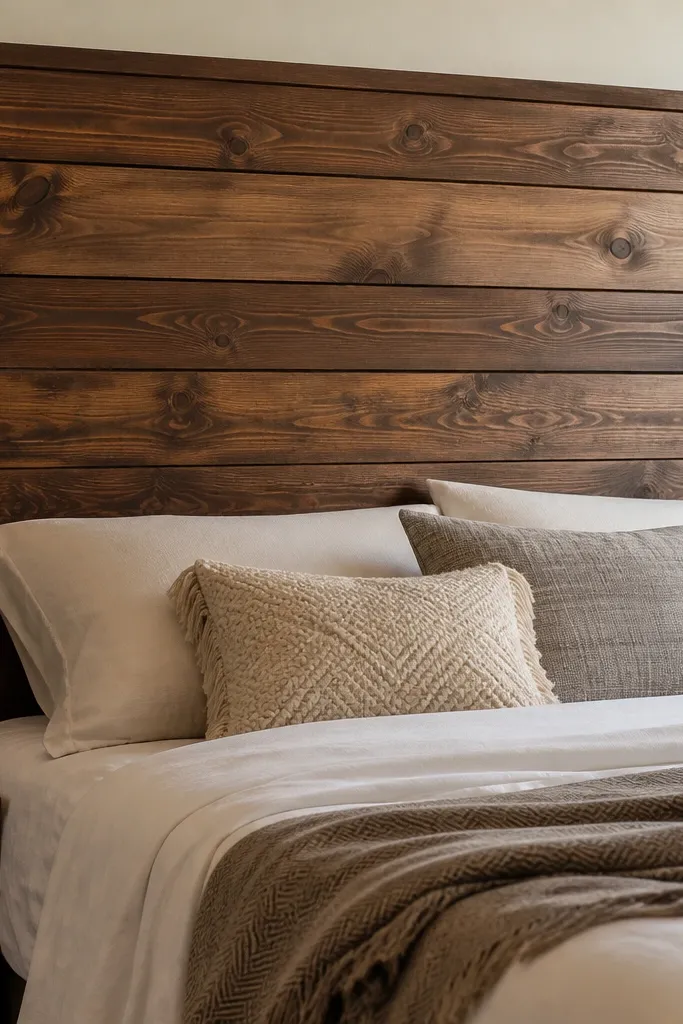
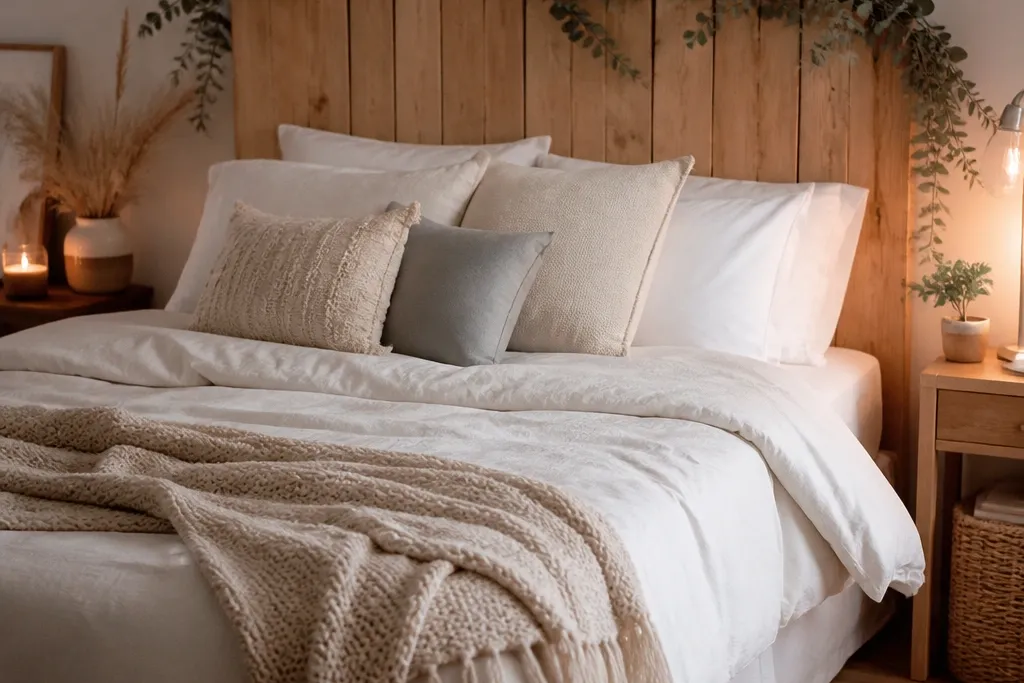
Wood slats look cozy when they’re warm-toned and evenly sanded. Pallet boards already have character, but the cozy part comes from a satin finish and consistent spacing. I like a walnut stain because it warms grey bedroom walls and doesn’t overpower light bedding. The slats also create gentle shadows, which reads cozy even in bright daylight.
Dismantle pallets carefully and sort boards by thickness so your slats don’t step up and down. Sand to 180 grit, then stain with a walnut stain in thin coats (wipe off excess after a few minutes). Build a simple rectangle frame from 2x2s or 1x3s and screw slats on with 1/2-inch spacing.
Seal with satin poly, not glossy — glossy reads cold and makes knots look shiny and loud.
Leaving rough splinters or uneven sanding makes it feel cheap the second you brush your hand on it.
3. No-Sew Faux Leather Straps Headboard
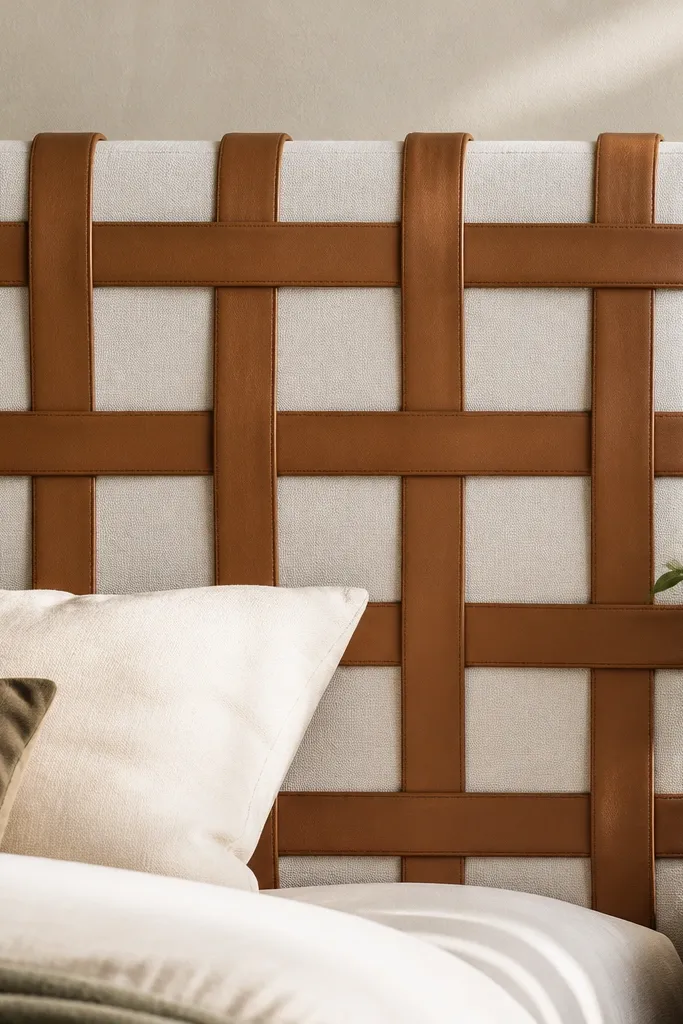
This is cozy because the straps create a warm, tactile pattern without bulky padding. Faux leather holds its shape better than thin vinyl, so it looks neat even if you’re not a perfectionist. The cream backing keeps it bright and makes the straps look intentional. I like this for modern bedrooms that still need softness.
Start with a rigid foam board or plywood backing covered in cream cotton (or a thick canvas). Cut strips of faux leather 1.25 to 1.5 inches wide and stretch them across the back, then staple neatly. Build a grid — for a full-size bed, I typically use 5 vertical and 5 horizontal rows across the width.
Use a heavy-duty stapler and staple every 1-2 inches along the back edge so the straps don’t loosen over time.
Stretching leather too tight on a soft backing makes it warp into waves.
4. Curtain Rod + Fabric Panel Headboard (Renters Love This)
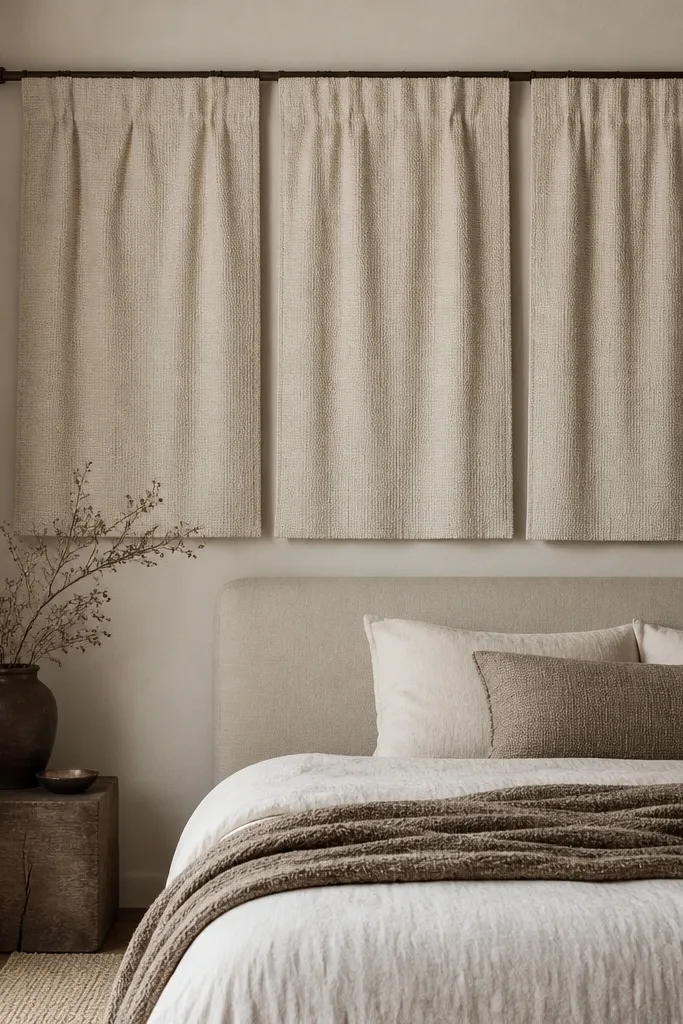
This is cozy because fabric moves and catches light like a softer wall. It’s also one of the fastest ways to add height and comfort without drilling into the bed frame. I’ve used thick drapery fabric so it doesn’t look flimsy — the panels hold shape and feel plush when you lean back. The clean rod line makes the whole thing look finished, not random cloth.
Mount a curtain rod centered above your bed frame at the height you want the top of the headboard to sit (usually around 58 inches). Use two or three panels, each about 1.25 times the width of the space so they fall with fullness. Hem the bottom with a 1-inch fold so it hangs straight.
Quick tipChoose fabric with a visible weave (boucle, textured linen, or heavy cotton twill) so it looks cozy even when it’s still.
One warningUsing thin sheers makes it look like decoration, not a headboard.
5. Woven Rattan Mat Headboard With Whitewash Finish
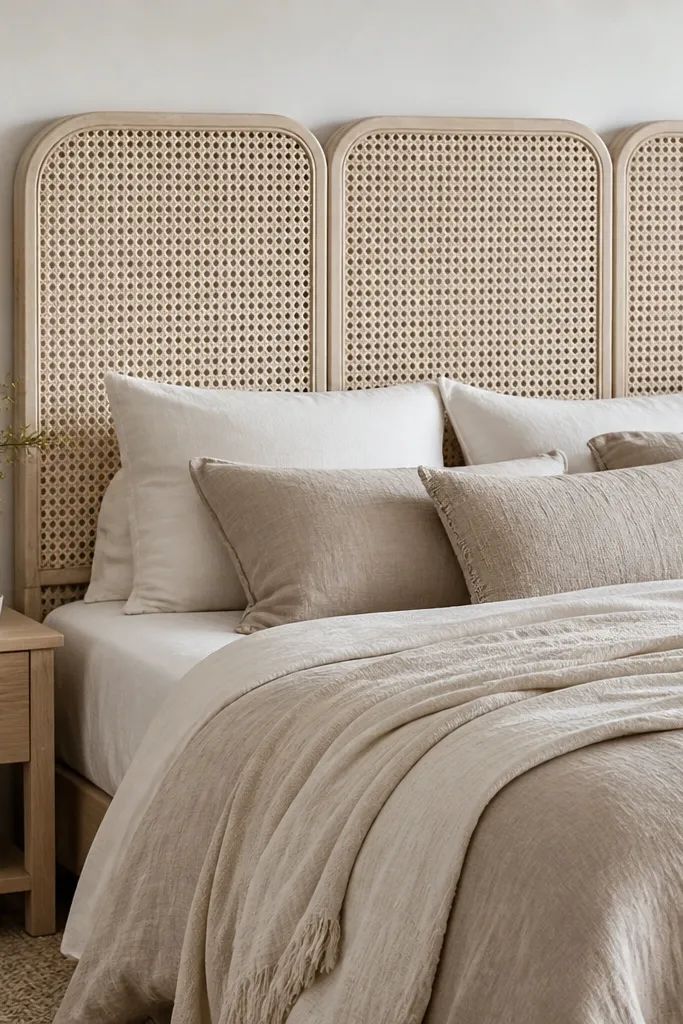
Woven texture reads cozy fast because your eyes get something to rest on. Whitewashing keeps rattan from looking too dark or tropical, and it brightens the wall behind the bed. I like this for bedrooms with light walls because the weave adds warmth without adding heavy color blocks. It also stays airy, which matters in small rooms.
Attach rattan mats to a plywood backing with a thin layer of wood glue and small finishing nails. Use a 1x2 frame around edges so the mats don’t fray or shift. For whitewash, mix white paint with water (about 1:1) and wipe it on, then immediately wipe back so the weave still shows.
Seal with a matte clear coat so it won’t snag or discolor from occasional contact.
Skipping a backing makes mats sag and pull away at the corners.
6. Chunky Knit Throw Headboard Over Foam Panels
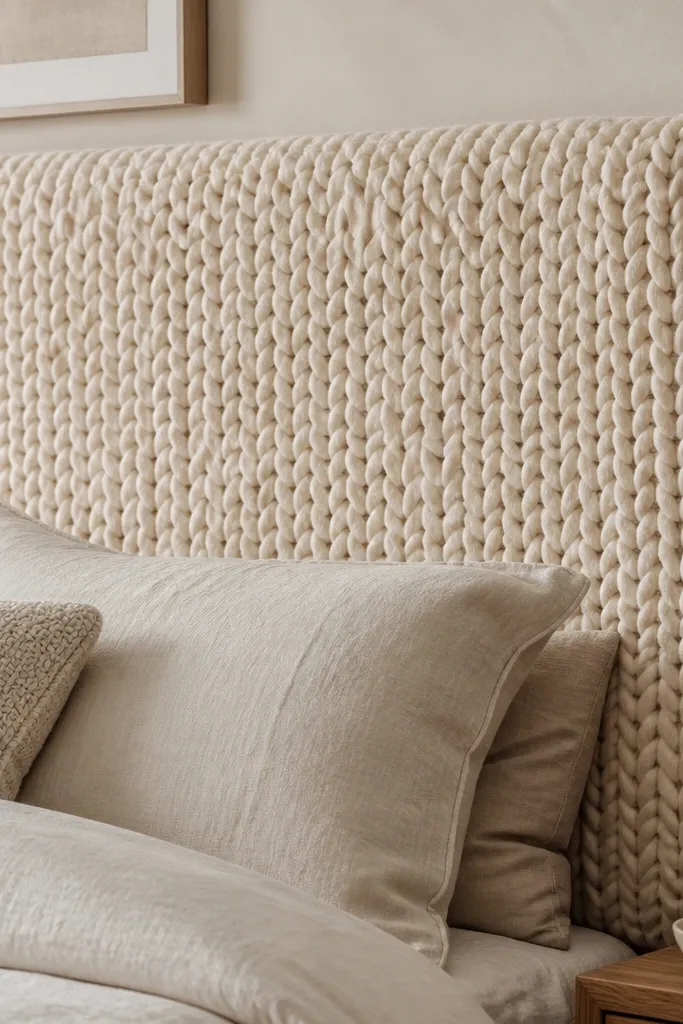
This looks cozy because chunky knit has dimension even when it’s not “styled.” Foam behind the knit makes it comfortable for leaning and gives the fabric something to cling to. The cream color reads soft and warm, especially against darker bed frames. I’ve used this in guest rooms — it makes the bed feel inviting the second you walk in.
Cut foam panels to the headboard size and wrap them in a thin batting layer so the knit sits smoothly. Stretch the knit over the foam and secure it to the back with a staple gun, pulling evenly so the loops don’t bunch. Use a wood frame so you can mount it with two brackets.
If the knit sheds, spray lightly with fabric adhesive spray on the back side only before mounting.
Letting knit fabric hang loose on the front makes it look like a blanket propped up.
7. Fabric-Wrapped Cork Board Headboard With Gold Pushpins
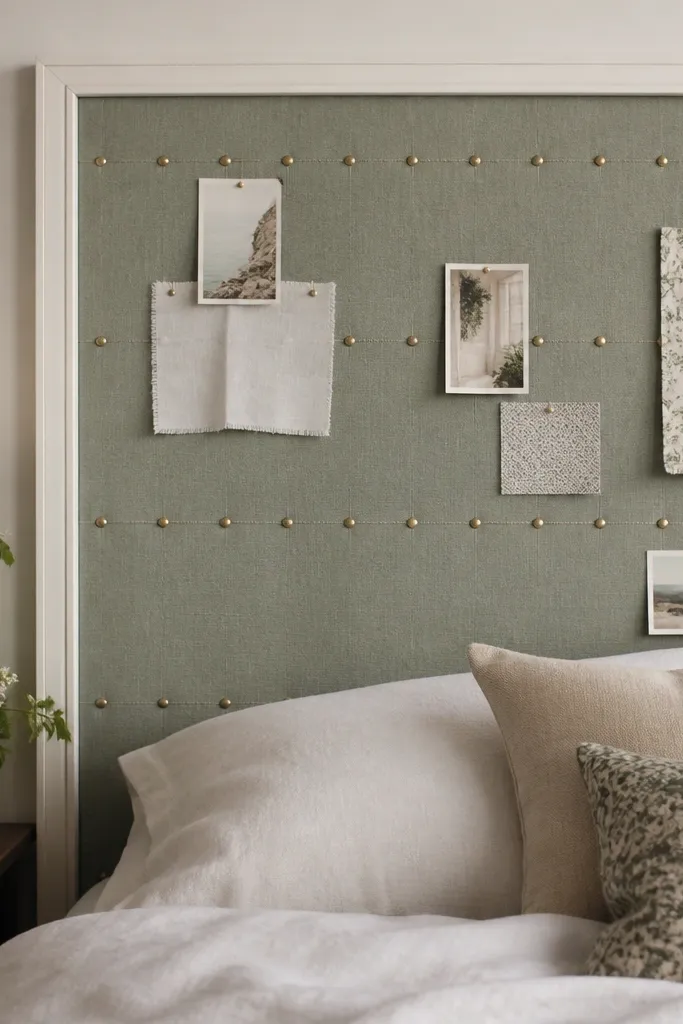
Cork headboards are cozy because they add soft texture and they’re quiet — your pillows don’t slide as easily. Covering cork with fabric makes it look like an upholstered piece, not a bulletin board. The pushpins add a personal touch without needing extra decor on top. I used sage fabric because it warms the room but stays calm.
Cut cork sheets to size and glue fabric over them with spray adhesive. Frame the edges with thin wood trim and miter corners for a clean look. Use pushpins to anchor a few small pieces at eye level, not across the whole surface.
Quick tipPick fabric with a tight weave so it doesn’t snag pushpins and fray.
One warningLeaving raw cork edges shows you’re in “DIY mode” instead of finished.
8. Faux Shiplap Headboard Using 1x4 Boards and Paint Glaze
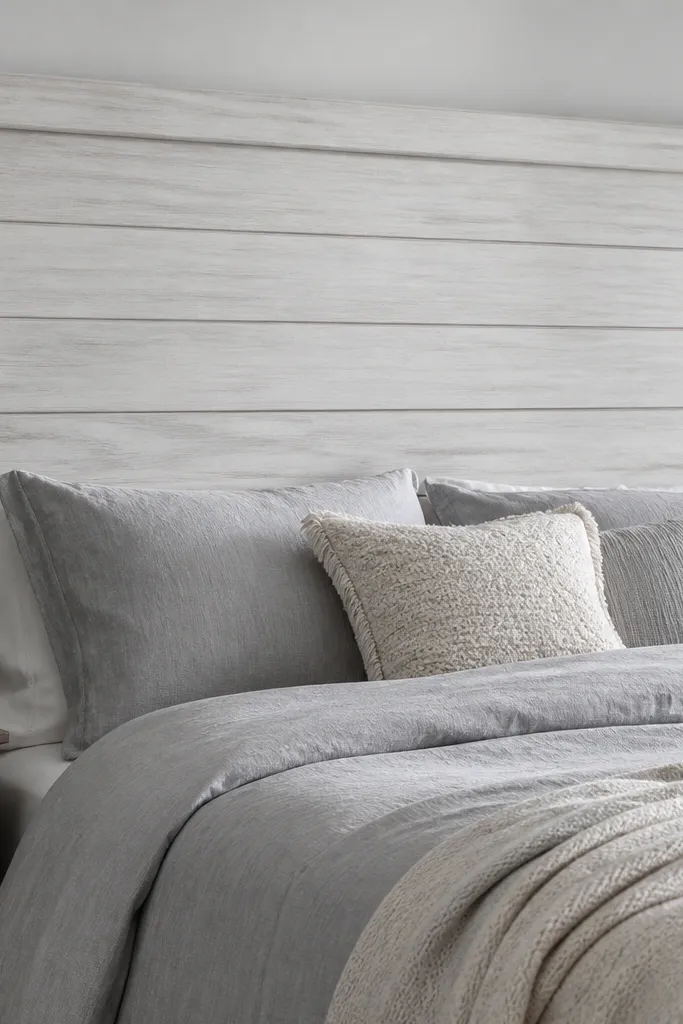
This reads cozy because the shadow gaps create soft texture, and the glaze keeps it from looking flat. I like painting 1x4 boards with a satin finish and then wiping a translucent grey glaze into the grooves. It gives you the farmhouse feel without the rough, dusty look. The headboard also works with modern rooms because it stays mostly neutral.
Build a frame from 1x3s, then screw 1x4 boards across with even gaps (1/8 to 1/4 inch). Prime first, then paint with a white satin. After drying, apply a grey glaze with a rag, wipe back, and let it set.
Quick tipUse a spacer block so every gap matches — the whole look depends on consistent spacing.
One warningSkipping primer makes the paint chip around knots and edges.
9. Layered Felt Garland Headboard (Wall-to-Bed Cozy)
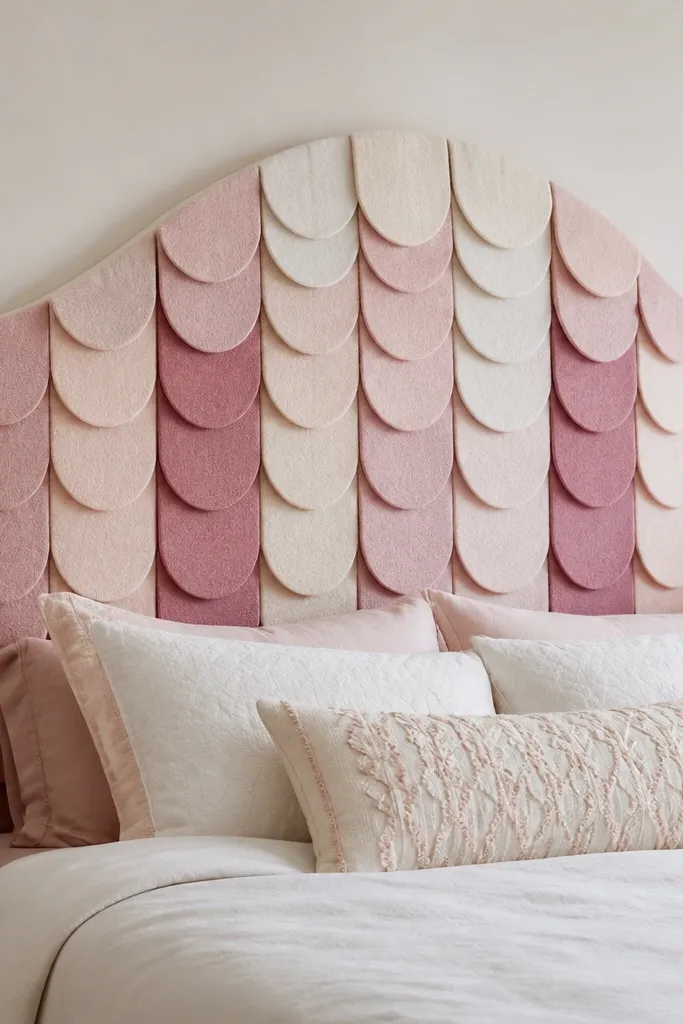
Felt garlands look cozy because they create a soft, handmade texture you can’t get from flat paint. Layered scallops also create depth at the edge of your bed where people usually glance. I used blush and cream tones because they look warm in both morning and night light. This one is great if you want cozy without big hardware.
Cut felt scallops in three sizes and layer them with hot glue onto a backing board covered in fabric. Arrange in vertical columns so the pattern lines up when viewed from bed. Keep the top edge consistent — I made a shallow arch by trimming the first row of scallops.
Quick tipGlue only at the center overlap so the scallops still flex and look dimensional.
One warningUsing one flat felt sheet with no layering makes it look like a craft project, not a headboard.
10. Shiplap + Upholstered Top Rail Combo
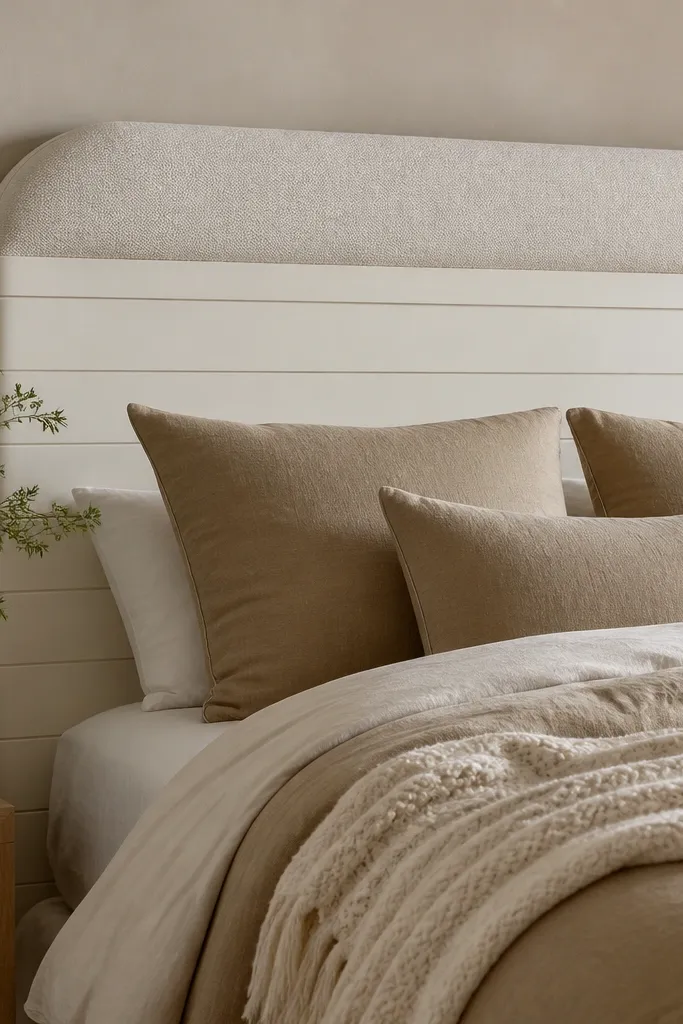
This combo is cozy because you get structure below and comfort where your head actually touches. The upholstered top rail is the part that matters for leaning, and it hides any wall imperfections. Shiplap below adds texture without feeling too soft or messy. It’s a look I keep coming back to because it works in both farmhouse and modern rooms.
Build the shiplap section first on a plywood backing, then add a separate upholstered rail on top. Use 2 inches of foam for the top rail and wrap with fabric, then staple to the back of the plywood. Make the rail about 12-16 inches tall so it hits your head height.
Use a thick fabric for the rail — upholstery-weight cotton or canvas hides creases better than lightweight cotton.
Making the upholstered section too short makes it feel like decoration instead of support.
11. Macrame Curtain Rod Headboard
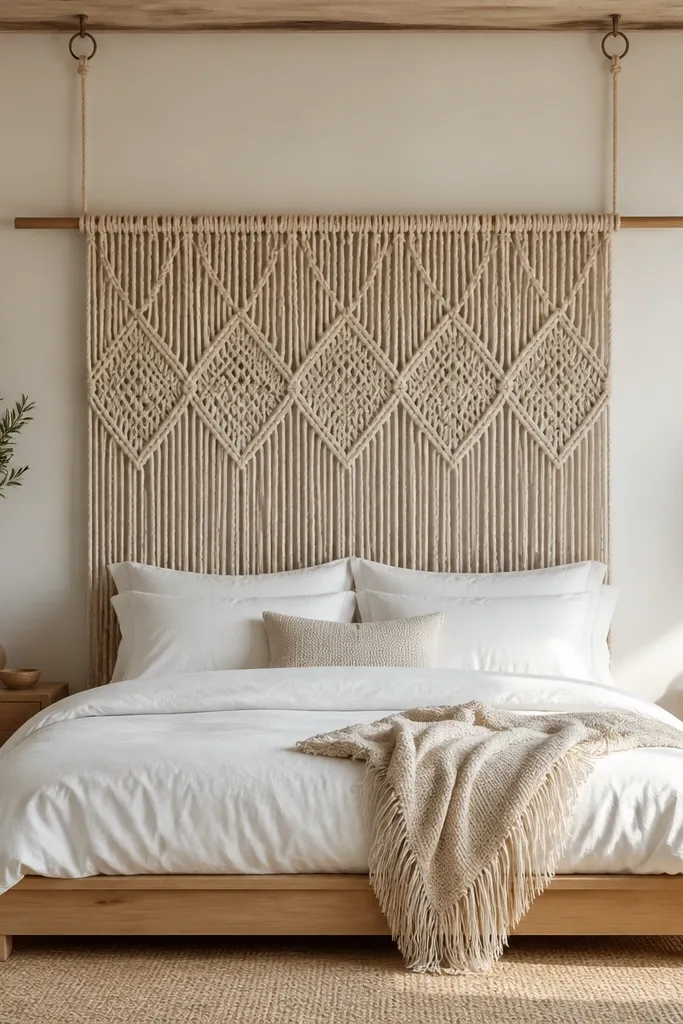
Macrame looks cozy because it adds softness and pattern without heavy color. The rope texture makes shadows that feel warm at night. I like this when you have tall ceilings or want a boho vibe that still feels clean. It’s also forgiving — small imperfections in knots read as part of the design.
Mount two sturdy rings or brackets on the wall above the bed and thread a rod or dowel through the macrame. If your macrame is a panel, secure the top edge with a few zip ties hidden behind the rod. Keep the bottom fringe about 4-6 inches above the top of your mattress so it doesn’t brush the sheets.
Mist the rope lightly with water and let it dry straight so the fringe hangs evenly.
Hanging it too low makes it catch on pillows and look messy.
12. Thrifted Quilt Headboard With Stretch Wrap Backing
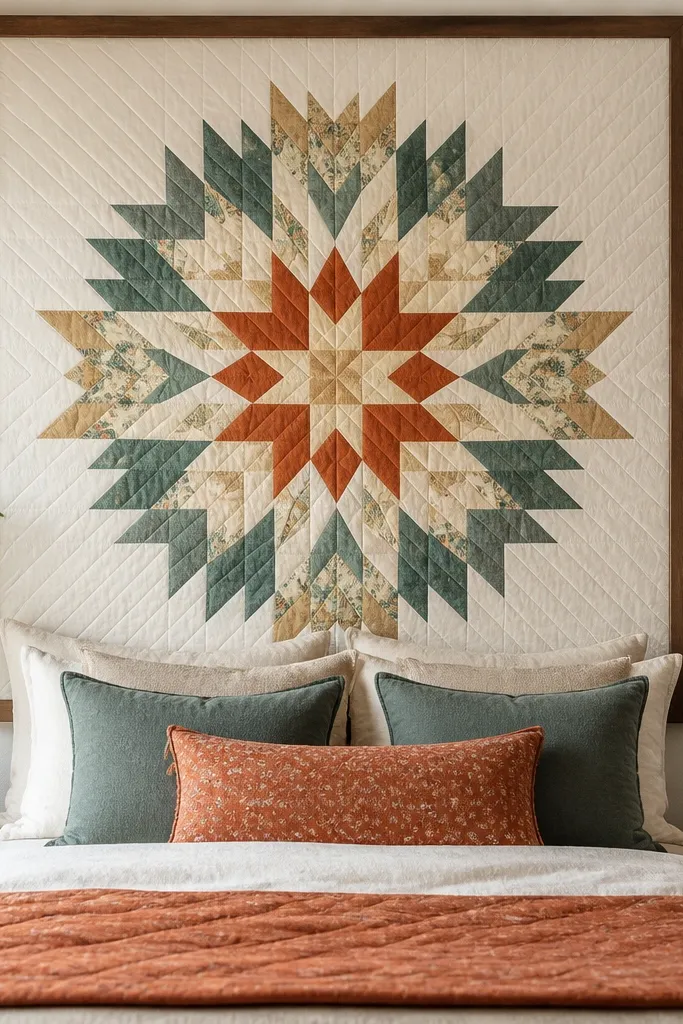
A quilt headboard is cozy because it already has the softness and warmth of home textiles. Mounting it tight over a backing keeps it looking crisp instead of lumpy. The patchwork also gives visual interest without needing extra wall art. I’ve used this when I want a seasonal look — swap quilts and the room changes instantly.
Stretch the quilt over a backing board and add a thin batting layer underneath so it feels plush. Wrap the quilt edges to the back and staple evenly, then cover staples with a fabric strip. Frame with 1x2 trim and mount with French cleats or two wall brackets.
Quick tipChoose a quilt that’s at least 6 inches wider than your board so you have enough fabric to pull tight.
One warningUsing a quilt that’s too thin makes it wrinkle and show the backing through.
13. Felt + Wood Peg Organizer Headboard (Cozy and Handy)
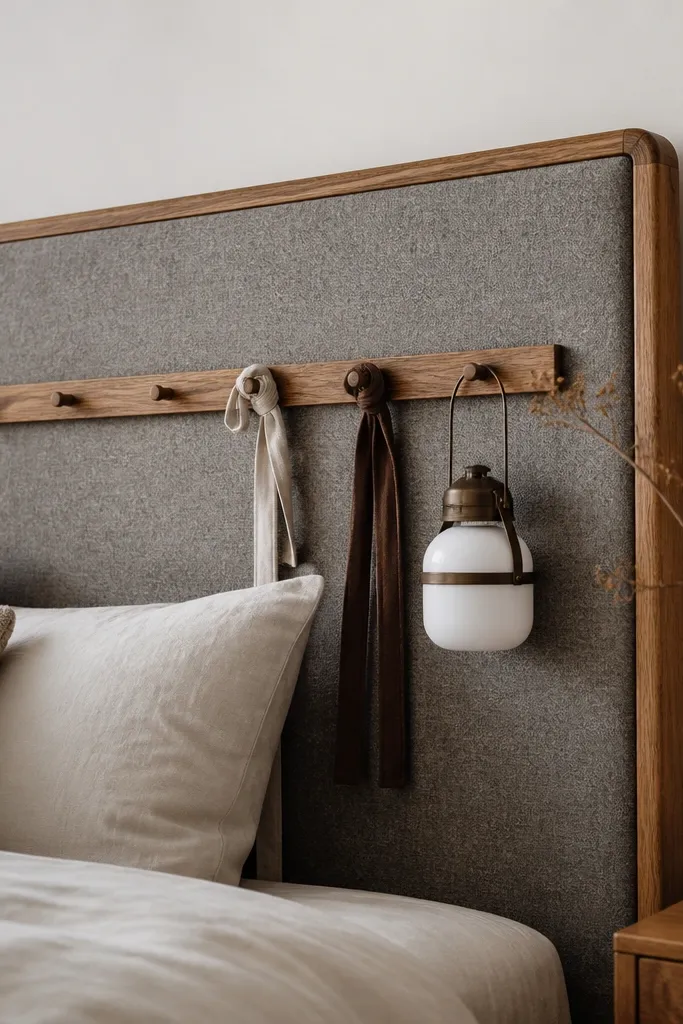
This one feels cozy because it’s soft to the touch and it keeps bedside items from cluttering the table. The wood peg rail adds a warm, functional detail. I built it for a reading corner where I wanted a spot for a book strap, charging cable clips, and a small lamp cord holder. It makes the bed area look styled even when you don’t add decor.
Cover a plywood board with warm grey felt using spray adhesive, then screw a small peg rail on top of the frame. Add pegs or hooks and keep them at a reachable height — about 18-24 inches above the mattress top. Use sealed wood stain on the frame so it wipes clean.
If you use electronics, route cords behind the felt and add a small fabric-covered cord channel on the back.
Mounting pegs too low makes them hit pillows and look like a mistake.
14. Corduroy Panel Headboard With Contrast Welt
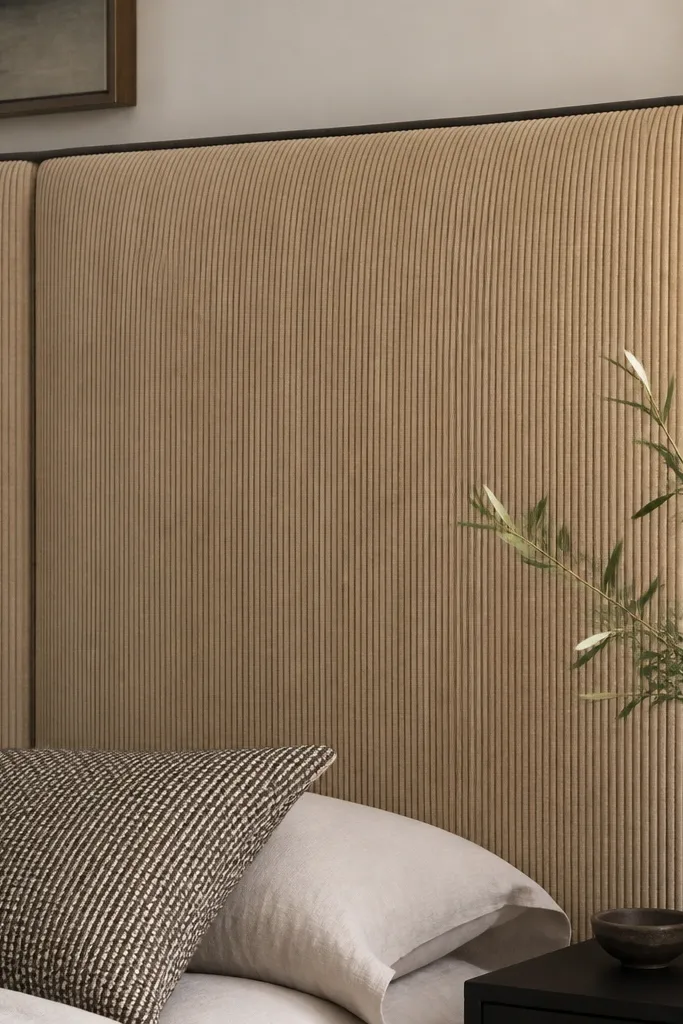
Corduroy is cozy because it has a soft texture you can feel even from across the room. The ridges create gentle highlights, so it doesn’t look flat in shadow. Contrast welt makes the seams look crisp and expensive. I’ve used sand corduroy in rooms with cool lighting because it warms everything up.
Cut two panels from plywood and wrap with 1 inch foam and batting. Use upholstery corduroy and sew or buy welt trim in charcoal. Attach the welt along the outer edge and staple underneath so it stays clean. Mount with two brackets at the back corners.
Pre-wash corduroy if you can — it shrinks slightly and prevents future warping.
Stretching corduroy too aggressively can distort the nap direction.
15. Vinyl Record Player Shelf Headboard (Cozy Listening Nook)
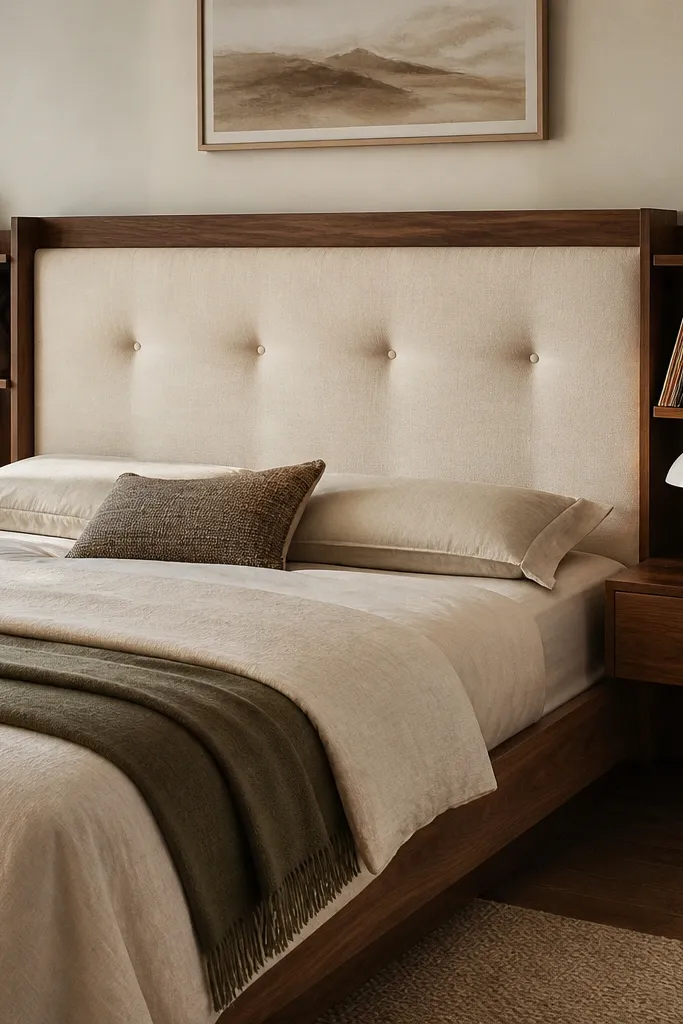
This feels cozy because it turns the bed wall into a listening nook, not a blank backdrop. The padded center lets you lean comfortably, and the shelves keep records visible but organized. I like placing the shelves on the sides only, so the center stays soft and calm. Warm walnut and cream also look great under amber bedside lamps.
Build a plywood center pad for upholstery, then add side shelves from 1x12 boards with a simple face frame. Stain the wood and seal with satin. Upholster the center with foam and batting, then attach the whole assembly to the wall or bed frame using sturdy brackets.
Quick tipLeave at least 2 inches of clearance between shelf edge and the bed frame so pillows don’t scuff the wood.
One warningOverloading shelves makes the wall look cluttered instead of cozy.
16. Faux Leather + Felt Acoustic Panel Headboard
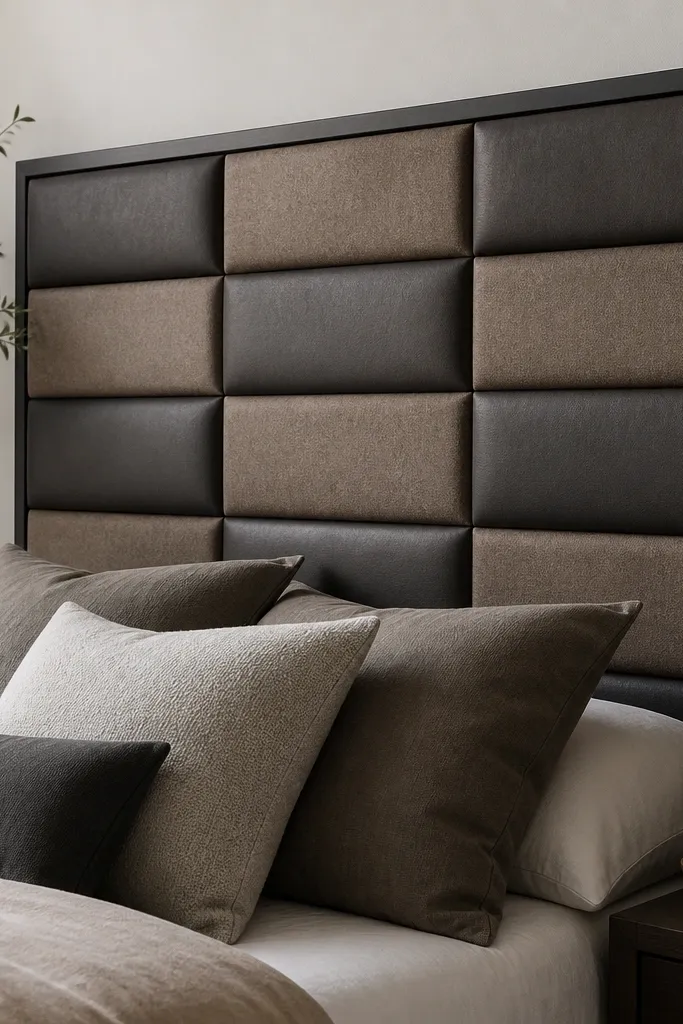
Acoustic-style panels feel cozy because they add softness and reduce the “hard wall” echo behind your bed. The faux leather gives a clean, wipeable surface, while felt adds warmth and texture. I made mine in a simple grid because the pattern looks intentional and doesn’t need extra decor. It’s also great if you want a modern look without losing comfort.
Use rigid foam or acoustic board as the backing for each block. Wrap blocks in faux leather for the dark pieces and felt for the warm pieces, then mount them on a framed base. Keep the grid spacing consistent at 1/4 inch so it looks designed, not random.
Quick tipUse a matte faux leather so it doesn’t glare under lights.
One warningUsing shiny vinyl makes it look like bargain office furniture.
17. Outdoor Canvas Headboard With Straps and Eyelets
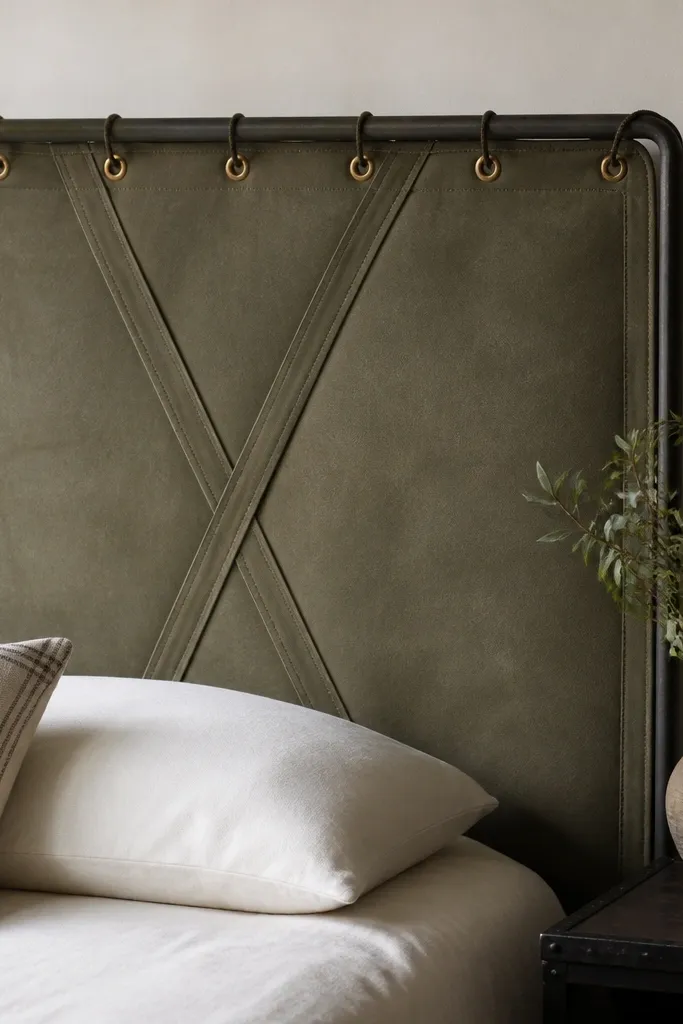
Outdoor canvas is cozy because it’s sturdy and soft enough to lean on without collapsing. Brass eyelets add warmth and keep the look from feeling plain. I like olive because it pairs with cream and tan bedding and makes the room feel lived-in. The strap detail gives it structure and keeps the fabric from looking like a sheet.
Stretch canvas over foam or thick batting on a plywood backing. Add brass eyelets into a wood frame and lace the canvas using waxed cord so it stays tight. For a full bed, keep the canvas border about 2 inches beyond the frame so you can wrap and hide edges.
Use waxed cord in a dark brown so it doesn’t fight the brass hardware.
Skipping heavy canvas makes it wrinkle and sag after a few weeks.
18. Wood Slat Headboard With Fabric Hinge Panels
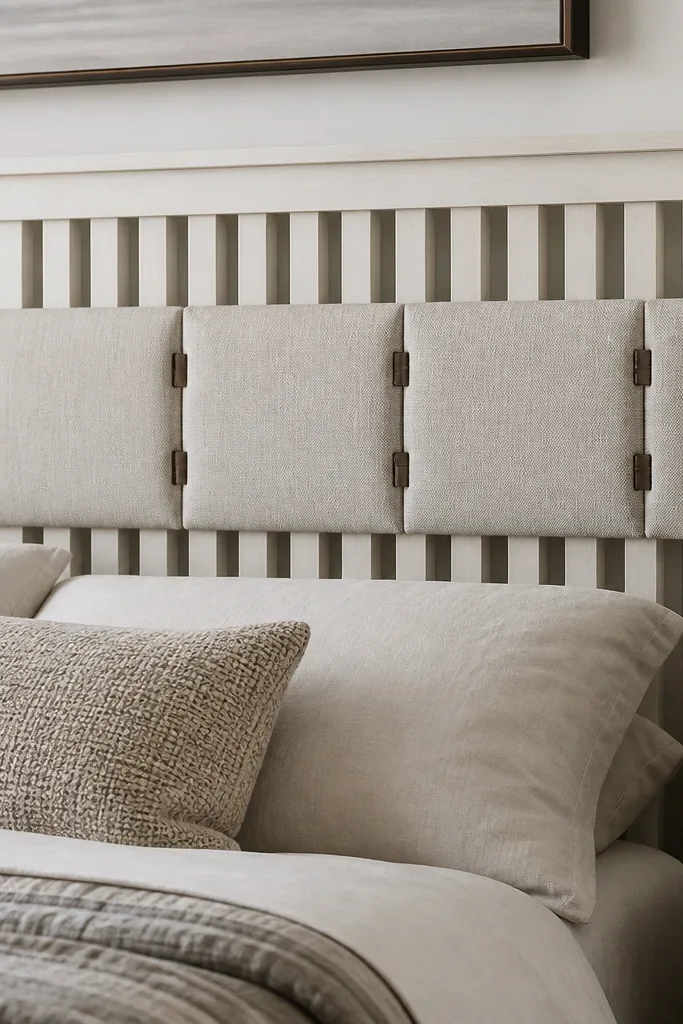
This one is cozy because you get a cushioned middle section where your head lands, while the slats keep the design light. The hinged fabric panels also let you adjust how much softness you want. I built it for a bed where I switch between two pillow sizes — the hinged panels help the pillow sit right. Off-white paint keeps the slats from feeling heavy.
Build a slat frame on plywood backing, then attach narrow fabric-covered foam inserts with small hinges or fabric ties. Make the inserts about 6-8 inches tall and space them so they align with where you sit. Paint the slats with a satin off-white and seal lightly.
Cover foam inserts with a removable fabric cover using Velcro so you can wash them.
Making the inserts too thick makes the headboard feel bulky and pushes pillows forward.
19. Macrame Knot Fringe Runner Headboard
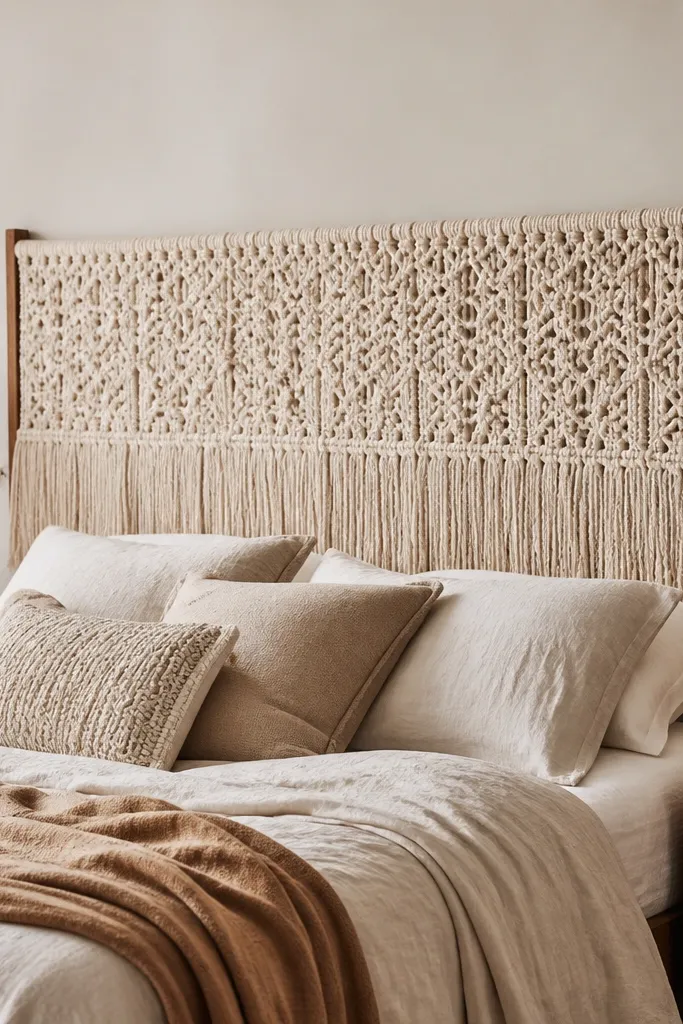
This looks cozy because dense knots create a soft, warm texture without needing upholstery. The fringe adds movement, and the cream tone stays calm. I like this when you want a headboard that feels artsy but still works with neutral bedding. It also hides small wall imperfections because it sits slightly away from the wall on a frame.
Mount the macrame runner to a wooden frame using zip ties or staples hidden at the back. Create a frame depth of about 1 inch so it doesn’t sit flat against the wall and collects dust. Hang it using two wall anchors centered on the frame so it stays level.
Quick tipSteam the macrame gently after mounting to even out fringe lengths.
One warningLetting the runner hang directly on the wall without a frame makes it look flat and dusty.
20. Felt Pocket Storage Headboard (Books + Blankets)
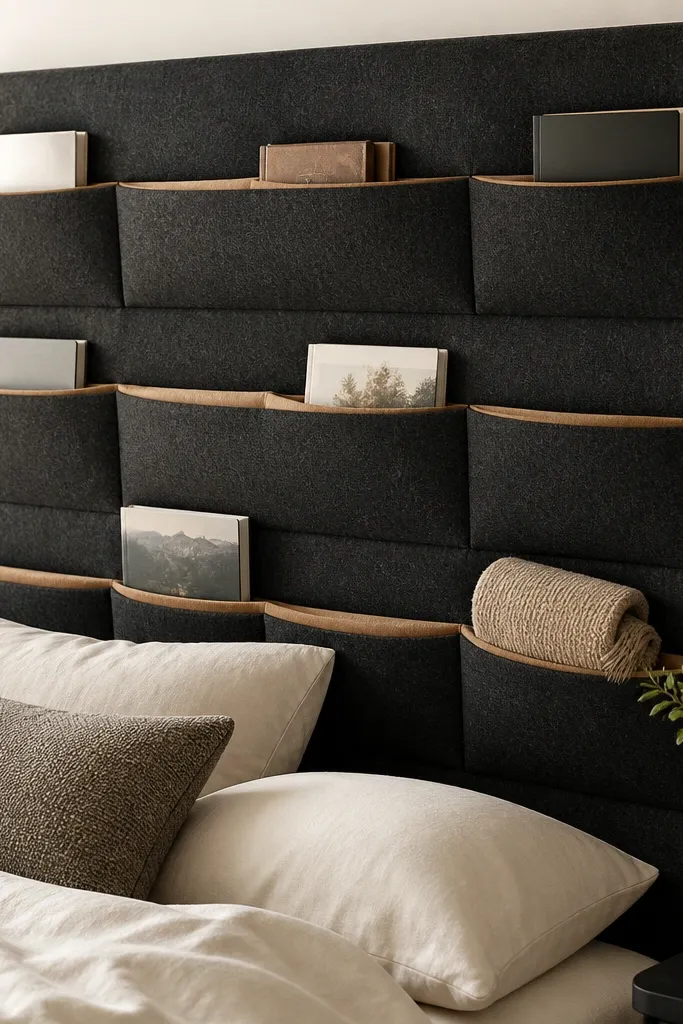
Storage makes a bedroom feel cozy because the bed area stays tidy. Felt pockets also look soft and prevent things from scraping the wall. I built mine with deep pockets for paperback books and shallow ones for remotes. Charcoal felt grounds the room, while tan lining keeps it warm and inviting.
Cut a full-size felt panel and stitch pocket shapes directly onto it with strong thread. Use a backing board so the felt stays upright instead of drooping. Mount with brackets so the top edge sits around 58 inches and the pockets land near your hand height.
Quick tipAdd a strip of Velcro at the top of each pocket flap so items don’t fall out when you move pillows.
One warningUsing thin felt makes pockets sag and look messy fast.